Showing posts with label history. Show all posts

Wednesday, 18 April 2012

1930s Germany

from betonbabe
ALBERT SPEER
1:1 FACADE MOCK-UP, 1938

ALBERT SPEER
1:1 FACADE MOCK-UP, 1938
LUDWIG MIES VAN DER ROHE
RESOR HOUSE PROJECT, 1939
LUDWIG MIES VAN DER ROHE
RESOR HOUSE PROJECT, 1939
HANS SCHAROUNSCHMUNKE HOUSE, 1933
HANS SCHAROUN

SCHMUNKE HOUSE, 1933

MAX BILLCONSTRUCTION BASED ON 30 ELEMENTS / STEEL SCULPTURE, 1938/1959
MAX BILL

CONSTRUCTION BASED ON 30 ELEMENTS / STEEL SCULPTURE, 1938/1959

ALVAR AALTO EXPERIMENTS WITH WOOD, 1930s
ALVAR AALTO 

EXPERIMENTS WITH WOOD, 1930s

LÁSZLÓ MOHOLY-NAGY 
PINS AND PLASTIC, 1937-38

LÁSZLÓ MOHOLY-NAGY
PINS AND PLASTIC, 1937-38
FRITS PEUTZ 
SCHUNCK GLASS PALACE IN HEERLEN, NETHERLANDS, 1935

FRITS PEUTZ
SCHUNCK GLASS PALACE IN HEERLEN, NETHERLANDS, 1935


Friday, 30 March 2012

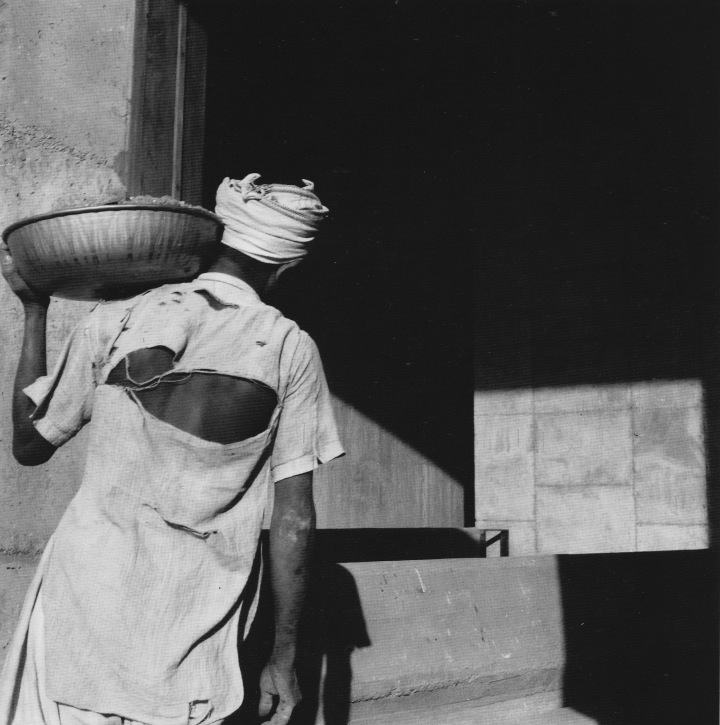
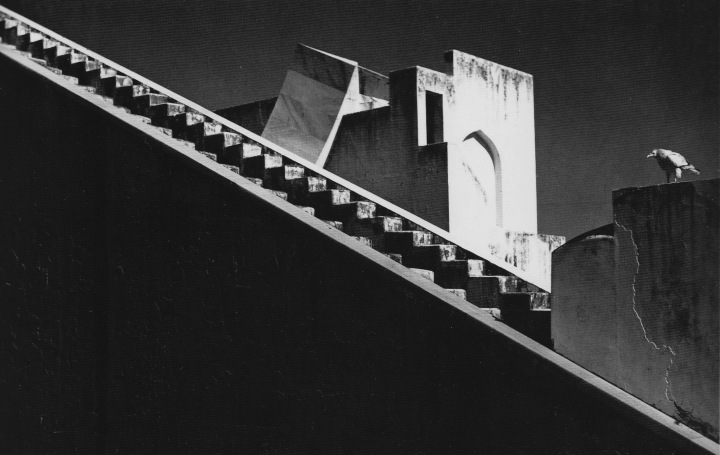
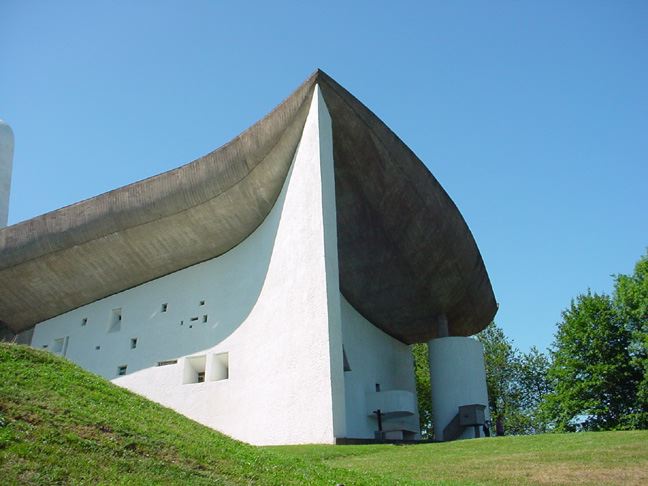
Lucien Herve; Architectural Photographer


Chandigarh, the High Court, India, Le Corbusier, architect, 1955; cropped 6 x 9 negative.
Jaipur, Observatory, India, 1955; cropped 6 x 6 negative.
Ronchamp Chapel, Le Corbusier, architect, 1953; cropped 6 x 9 negative.

Wednesday, 28 March 2012

Smelly Architecture; Herzog and De Meuron

beauty and waste in the architecture exhebition 2005 Rotterdam
"We look for materials which are as breathtakingly beautiful as the cherry blossom in Japan, as dense and compact as the rock formations of the Alps or as mysterious and unfathomable as the surface of the oceans. We look for materials which are as intelligent, versatile and complex as natural phenomena, in other words materials which don't just appeal to the eyes of the astounded art critic, but are also really efficient and appeal to all our senses – not just vision but also hearing, smell, taste and touch." Jaques Herzog
Amazingly or perhaps revealingly Herzog and de Meuron don't rely on computer software but prefer the concrete process with sketches and models made of plasterboard, wire, Styrodur and Plexiglas. In other words models, models, models which seamlessly merge into numerous photos of building sites...full page arial photographs indicating the relationship are shown too and the drawing; all of them simple black and white line drawings, highly precise and in each case indicating scale.
from architonic

Saturday, 24 March 2012

Friday, 17 June 2011

City with no streets; Çatal Höyük

I like this. via www.deconcrete.org. It's a really interesting idea and I like the idea it brings up, that idea of an equal society can be projected through the formation of a city.


"In Çatal Höyük, there used to be no streets or pathways. Instead, façade walls touched each other without any gap in-between. With a single opening on the roof, each dwelling’s chimney functioned as lighting window as well as entrance door."


"Contiguous constructions made people use rooftops as a very lively public space. The city was an endless building. Dwellers should climb up a timber ladder to get onto the roofs topography; walk along and above their neighbours’ homes, until they found the hole from where to climb down through another ladder into their own...

"this society was balanced in terms of gender and wealth. Nonetheless, an increase in the amount of burial goddesses’ representations leads to think of a shift from an egalitarian community to a matriarchal society.
There was no public building with a higher hierarchy in the whole settlement, but basic homogenous domesticity."


Friday, 15 April 2011

The Wall


The Wall: the most insane and pointless invention in the history of architecture.

Berlin Wall
"Essentially, these communities enforce separation between social classes. Interesting here is the fact that the rich politely choose to lock themselves out of the rest of society. On the other hand, Michel Foucault believed that the legal systems only serves the upper classes, and functions as a mechanism to segregate “the most dynamic of the lowest social class from the rest of society, then forced them together as a group of outcasts, thus rendering them politically harmless”.
This is what actually happens in Rio de Janeiro, where the local authorities decided to build a wall around the favela Morro Dona Marta. The underlying reason is the same as that of the gated community, which is the creation of a spatial division between rich and poor, but the perspective is different. The poor are pushed away from society.

It’s not about its physical presence, but rather about its mental and emotional significance

Palestinian Wall
Brasillian Gated community