
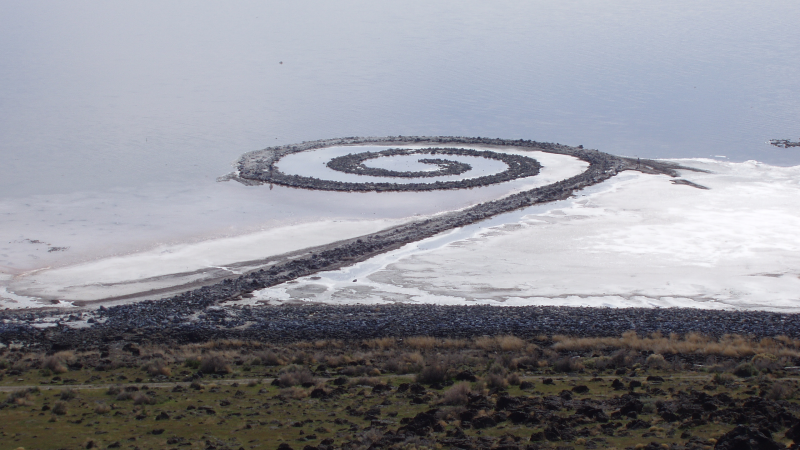
sprial jetty
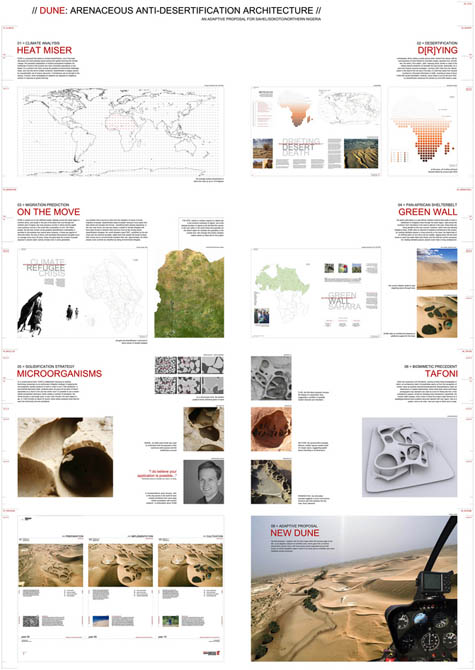

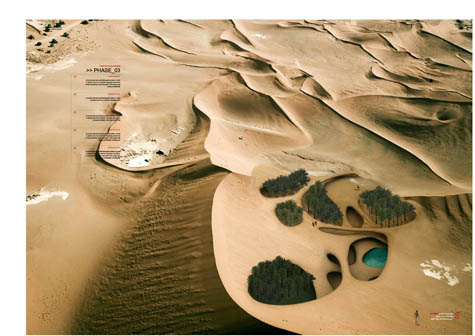
From a prject called Dune: Arenaceous Anti-Desertfication Architecture by Magnus Larsson. Won the Holcim Foundation's Awards for Sustainable Construction held in Marrakech, Morocco.
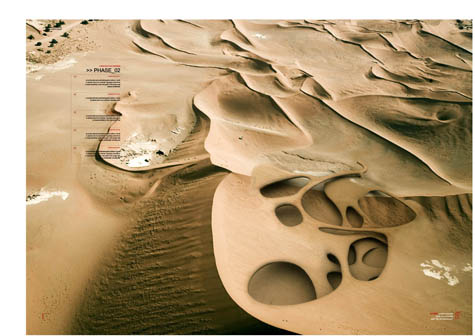
One of the most interesting aspects of the project, I think, is that this solidified dunescape is created through a particularly novel form of "sustainable construction" – that is, through a kind of infection of the earth.
Larsson has proposed using bacillus pasteurii, a "microorganism, readily available in marshes and wetlands, [that] solidifies loose sand into sandstone," he explains.
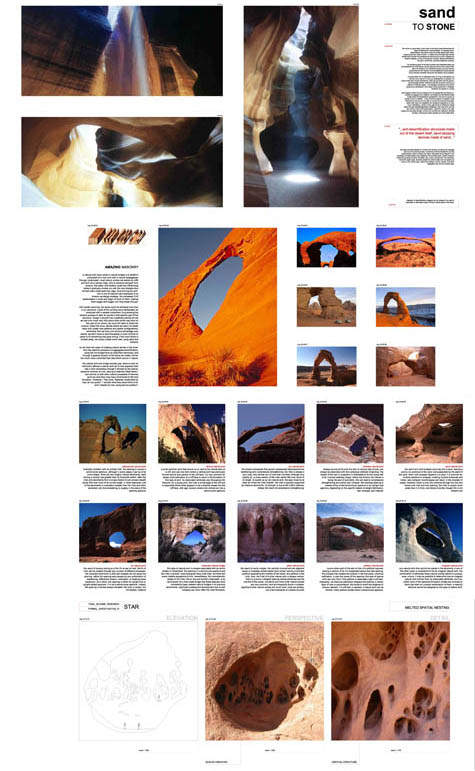 info and images via bldgblog
I'm reminded of Michael Welland's recent book Sand. There, Welland describes "how deserts operate" (he compares them to "engines" of mechanical weathering); he points out that you can still find "sand-sized fragments of steel" on the D-Day beaches of Normandy, war having left behind a hidden desert of metal; and he mentions that the UK now maintains "the world's first database of sand" – but that it's used "specifically for police forensics."
Welland's descriptions of sand dune physics are particularly memorable. He writes, for instance, that an avalanche is really a sand dune being "overwhelmed by the huge number of very small events" on its surface, and that these "very small events" unpredictably lead to one decisive moment of cascading self-collapse.
Larsson's project descriptions maintain this somewhat hallucinatory feel:
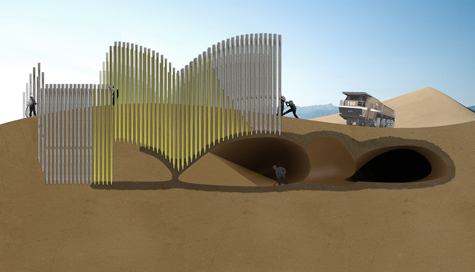 [Image: From Magnus Larsson's Dune: Arenaceous Anti-Desertification Architecture].

The crystal World by J.G. Ballard

Frances Richardson


Sian Bowen
From a prject called Dune: Arenaceous Anti-Desertfication Architecture by Magnus Larsson. Won the Holcim Foundation's Awards for Sustainable Construction held in Marrakech, Morocco.
One of the most interesting aspects of the project, I think, is that this solidified dunescape is created through a particularly novel form of "sustainable construction" – that is, through a kind of infection of the earth.
Larsson has proposed using bacillus pasteurii, a "microorganism, readily available in marshes and wetlands, [that] solidifies loose sand into sandstone," he explains.
info and images via bldgblogI'm reminded of Michael Welland's recent book Sand. There, Welland describes "how deserts operate" (he compares them to "engines" of mechanical weathering); he points out that you can still find "sand-sized fragments of steel" on the D-Day beaches of Normandy, war having left behind a hidden desert of metal; and he mentions that the UK now maintains "the world's first database of sand" – but that it's used "specifically for police forensics."
Welland's descriptions of sand dune physics are particularly memorable. He writes, for instance, that an avalanche is really a sand dune being "overwhelmed by the huge number of very small events" on its surface, and that these "very small events" unpredictably lead to one decisive moment of cascading self-collapse.
Larsson's project descriptions maintain this somewhat hallucinatory feel:
- I researched different types of construction methods involving pile systems and realised that injection piles could probably be used to get the bacteria down into the sand – a procedure that would be analogous to using an oversized 3D printer, solidifying parts of the dune as needed. The piles would be pushed through the dune surface and a first layer of bacteria spread out, solidifying an initial surface within the dune. They would then be pulled up, creating almost any conceivable (structurally sound) surface along their way, with the loose sand acting as a jig before being excavated to create the necessary voids. If we allow ourselves to dream, we could even fantasise about ways in which the wind could do a lot of this work for us: solidifying parts of the surface to force the grains of sand to align in certain patterns, certain shapes, having the wind blow out our voids, creating a structure that would change and change again over the course of a decade, a century, a millenium.
[Image: From Magnus Larsson's Dune: Arenaceous Anti-Desertification Architecture].The crystal World by J.G. Ballard
Frances Richardson
Sian Bowen
