Sunday, 16 September 2012

ghost offices

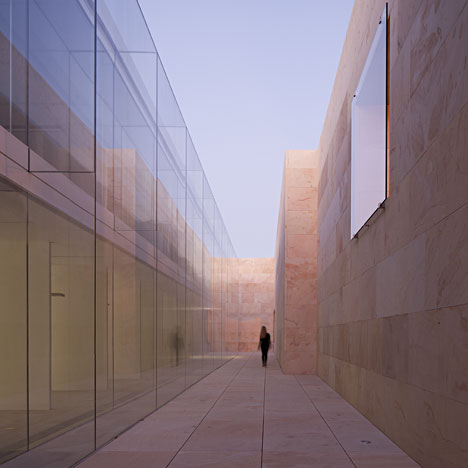
These offices for Junta de Castille y Leon in Spain via dezeen are composed of structural silicon walls concealed inside sandstone walls and feel less like offices and more like some sort of temple of the future, or even the past. The sandstone stops it from being clinical but the empty open floors seem a bit too precise and pure to me, a bit too ghostly and peaceful. There are some nice aspects though, like the ventilated cavity to stop overheating in the summer, and the outside corridors between glass and stone.
Offices for Junta de Castilla y León by Alberto Campo Baeza
even the plan's quite nice Offices for Junta de Castilla y León by Alberto Campo Baeza

160s created buildings with “enormous vitality and an impressive social mission.”

Reinier de Graf of OMA on masterpieces by bureaucrats
via www.dezeen
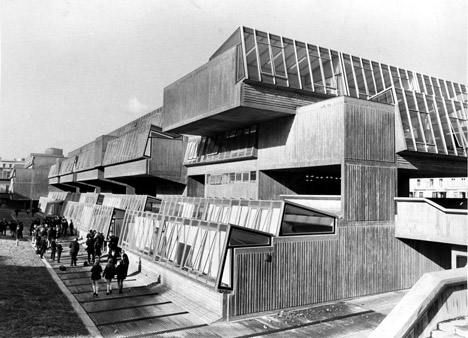
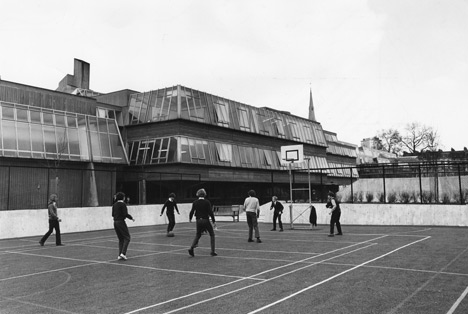
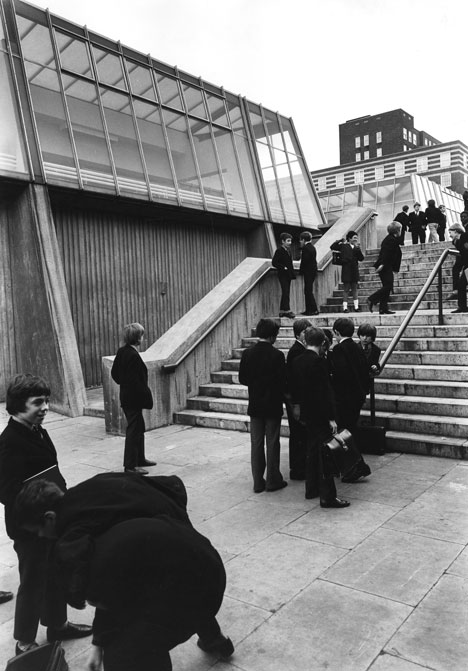
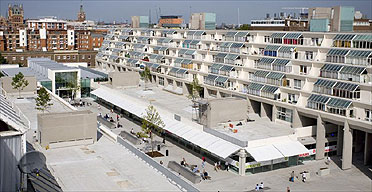
Building above Pimlico School, London. Const. 1960 demolished 2011 by those bloody, "bloody, fools"
Reinier de Graf of OMA on masterpieces by bureaucrats

Saturday, 15 September 2012

Dangerous Architecture Today

1960-70s buildings are under threat.

“An overdose of utopia is dangerous,” explains de Graaf when discussing the ideals of architects during this period, “but architecture today is characterised by an underdose of utopia, which can be just as dangerous.”
Reinier de Graaf
dezeen

More successful Brutalism; Bruswick Centre

Discovered Brunswick Centre about 3 years ago and keep coming back to experience this weird wonderful place where concrete is transformed into an airy, bright, light experience and where I always feel like I'm in France for some reason. it's very strange.
liked this article from guardian about it regeneration;


Brunswick Centre
Like a sci-fi movie set ... Brunswick Centre. Photograph: Ed Hill

Friday, 14 September 2012

mighty, mighty BARBICAN! and co


A spring strut through the Barbican estate, London
via urban75
and then there's this lot...


via londonist

tropical moderno

if anyone has any more tropical moderno architecture examples in mozambique, they would be very appreciated
Estação de CFM da Beira e a Baia de Sofala visto do Prédio de Anfândega.
these are from panoramio
Beira75
Maputo, Av.Pinheiro Chagas, 1968 ######## Actual Av.Eduardo Mondlane
Maputo
Untitled
Untitled
quelimane-catedral

Wednesday, 22 August 2012

Appropriated Landscape

"Appropriated Landscapes" explores landscape typologies in South Africa, Namibia, Angola, and Mozambique presenting works by fourteen artists: Jane Alexander, Ângela Ferreira, Peter Friedl, David Goldblatt, Christine Meisner, Sabelo Mlangeni, Santu Mofokeng, Zanele Muholi, Jo Ractliffe, Penny Siopis, Mikhael Subotzky/Patrick Waterhouse, Guy Tillim, and--with his North American landscapes--Mitch Epstein.


The exhibition includes newly-commissioned works by Ângela Ferreira, Christine Meisner, Mikhael Subotzky/Patrick Waterhouse and Peter Friedl, as well as an extended presentation of "As Terras do Fim do Mundo," Jo Ractliffe's photographic essay on the war-torn Angolan countryside. Many of the artists presented in "Appropriated Landscapes" have created images through topographical studies, explorations of nomadic peripheries and in-between spaces, or chronicles of social geography altered by divisive spatial planning and modern architecture. The concept of landscape here is not linked to historical notions of the picturesque and the sublime. Instead, the exhibition considers landscape as a prism of experience, a reflection of ideology, and a stage for the performance and perception of identity.


Whether sweeping views, architectural compositions, or portraits, the varied works in the exhibition remind us of the density and richness of the notion of landscape, the complexity and subjectivity of its depiction--and ultimately, of our own spiritual, emotional, personal, and political relationship to it.